The use of double sided tape has expanded from simple office bonding to professional mounting, product assembly, packaging, automotive decoration, signage, crafts, and industrial fixing. Because adhesive is applied on both sides, double sided tape can bond two surfaces together without visible glue, screws, rivets, or staples.
For buyers, the best double sided tape is not simply the strongest one. It should match the surface material, load, temperature, thickness, removability, appearance, and application environment. Runhu provides Double-Sided Tape, tissue tape, nano tape, masking tape, packing tape, and other adhesive tape solutions for commercial, retail, and industrial use.
What Is Double Sided Tape Used For?
Double sided tape is used to bond two surfaces together by placing adhesive between them, creating a clean and hidden attachment. It is commonly used when users want a neat appearance, fast installation, and no drilling or wet glue.
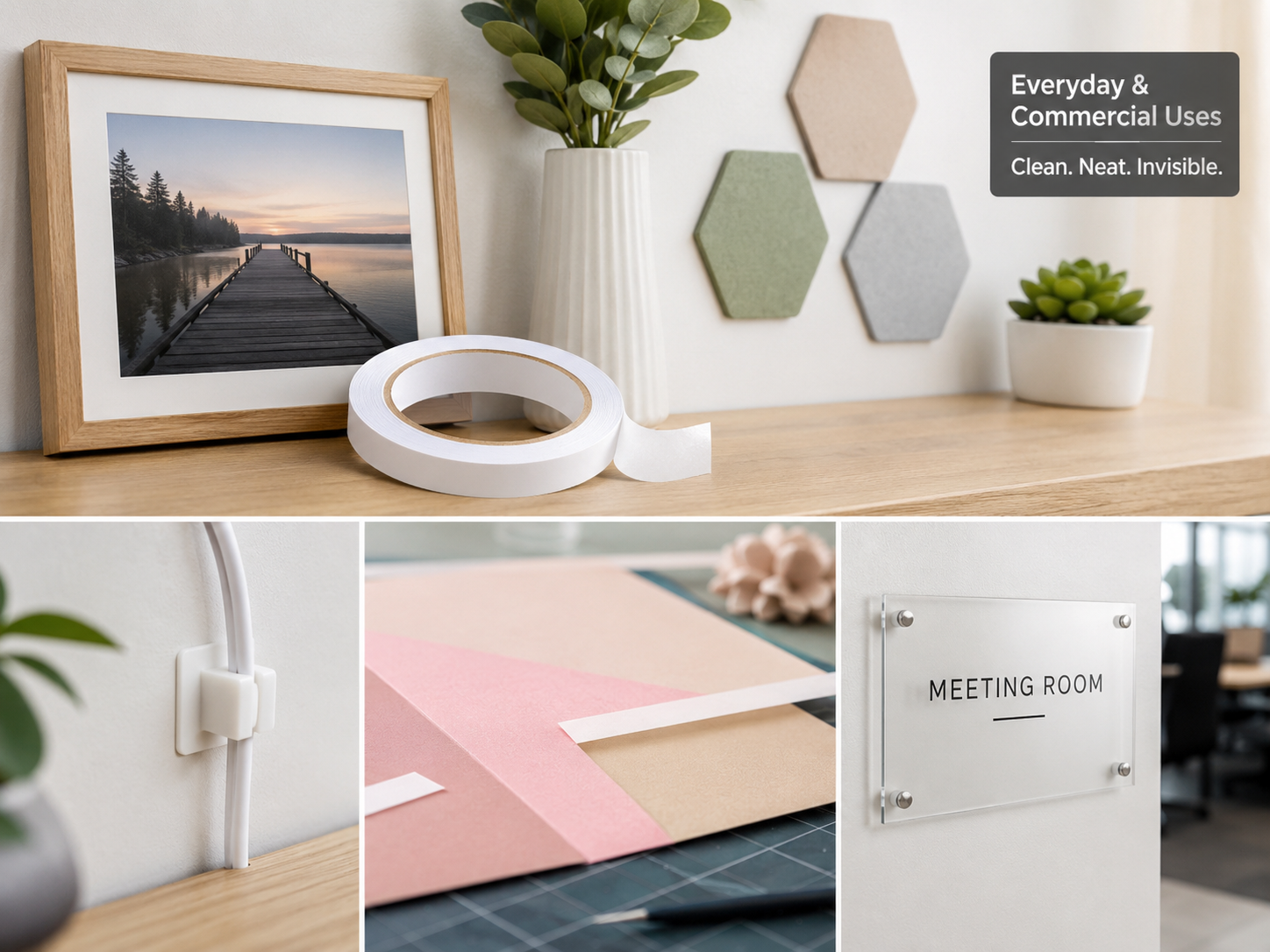
In everyday use, double sided tape can attach photos, labels, envelopes, posters, gift packaging, handmade crafts, and lightweight décor. In commercial use, it helps mount signs, displays, nameplates, decorative panels, hooks, samples, and promotional materials. In industrial use, double sided tape can support electronic assembly, automotive trim, foam lamination, furniture decoration, and temporary positioning during production.
Runhu's Double Sided Tissue Tape is designed for smooth, invisible bonding on paper, fabric, glass, and plastic, making it suitable for gift wrapping, craft projects, and display setups. For buyers who need stronger bonding, Runhu’s heavy-duty double sided tape can bond wood, metal, and plastic, with weather-resistant performance from -20°C to 80°C.
Common Uses of Double Sided Tape by Application
The use of double sided tape depends on the required bonding strength, surface type, removability, and working environment. A light craft tape and a heavy-duty mounting tape may look similar, but they perform very differently.
For packaging and retail, double sided tape is used to seal envelopes, attach samples, fix promotional cards, and create invisible closures for gift boxes. For signage and display, foam or acrylic double sided tape helps mount signs, badges, panels, and exhibition graphics without visible fasteners. For home and office use, it can hold lightweight hooks, cable clips, photo frames, and desk accessories.
In automotive and industrial applications, double sided tape is often used for trims, emblems, protective strips, gasket bonding, and plastic or metal component assembly. In electronics, thin double sided tape can support screen bonding, battery positioning, lens fixing, and insulation-related assembly when the correct material is selected.
For high-performance applications, testing standards matter. The ASTM D3330 peel adhesion test method is commonly used to assess the adhesion uniformity of pressure-sensitive adhesive tape, while the ASTM D3654 shear adhesion test method evaluates how well a tape remains bonded under a constant load applied parallel to the surface.
Double Sided Tape Types and Comparison Table
Double sided tape types should be selected according to carrier material, adhesive strength, thickness, surface compatibility, and removal requirement. The table below compares common options for different use cases.
| Tape Type | Main Feature | Typical Use | Key Buying Point |
|---|
| Double Sided Tissue Tape | Thin, easy to tear, clean bonding | Paper, crafts, envelopes, gift packaging | Good for light-duty invisible bonding |
| Foam Double Sided Tape | Thick, gap-filling, shock absorption | Signage, wall mounting, nameplates | Good for uneven surfaces |
| Acrylic Double Sided Tape | Strong, durable, weather resistant | Automotive trim, glass, metal, plastic | Better for long-term bonding |
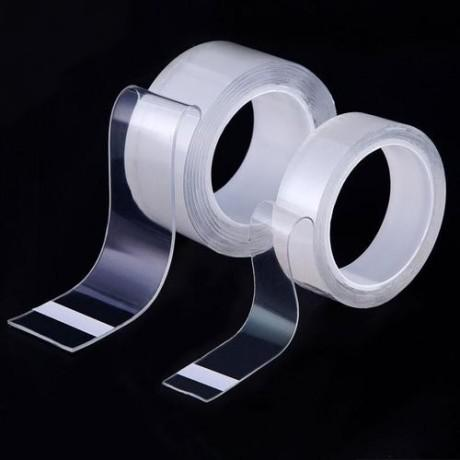
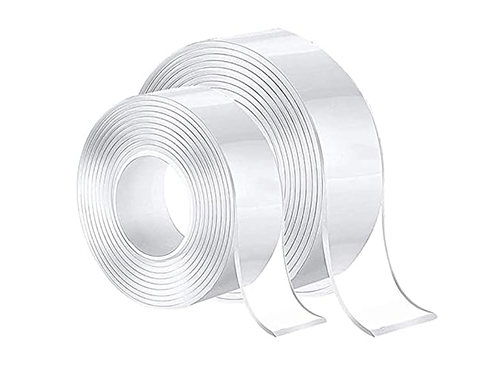
| Nano Tape | Reusable, strong grip, flexible | Home mounting, hooks, storage items | Good for removable applications |
| Transfer Tape | Adhesive-only structure, very thin | Printing, labels, electronics, lamination | Best when no carrier thickness is desired |
For example, Runhu's Nano Tape is designed with a nanostructured adhesive layer and is described with shear stress resistance up to 8N/cm², temperature resistance from -40°C to 200°C, and an ultra-thin 0.02mm design. This makes it suitable for demanding applications where smooth appearance and strong surface contact are important.
How to Use Double Sided Tape Correctly
Using double sided tape correctly means preparing the surface, applying pressure evenly, and allowing the adhesive to build strength under suitable conditions. Even a high-quality tape may fail if the surface is dusty, oily, wet, rough, or poorly aligned.
Before application, clean the surface and let it dry completely. For many pressure-sensitive tapes, the bonding surface should be stable, clean, and dry. The 3M VHB tape surface preparation technical bulletin also notes that an IPA/water mixture is commonly used for surface cleaning before bonding.
After cleaning, apply the tape without stretching it. Press firmly across the full bonding area so the adhesive can wet out the surface. For heavier objects, increase the bonding area instead of relying only on a small strip. Avoid immediate heavy loading when possible, because many pressure-sensitive adhesives build stronger contact after pressure and time.
Runhu recommends cleaning surfaces with alcohol, letting them dry, peeling part of the liner, pressing the tape firmly on one surface, then aligning and pressing the second surface with even pressure. This simple process helps reduce edge lifting, bubbles, and weak bonding.
Conclusion
Double sided tape is useful because it provides clean, fast, and hidden bonding for packaging, office work, crafts, signage, automotive trim, electronics, and industrial assembly. The right tape can replace liquid glue, nails, screws, or mechanical fasteners in many applications, while improving appearance and installation speed.
For light-duty paper and craft use, tissue tape is usually enough. For wall mounting and signage, foam or acrylic tape is more suitable. For removable household fixing, nano tape can be a strong option. Runhu offers double sided tape, tissue tape, nano tape, packing tape, and other adhesive solutions to help buyers match tape performance with real application needs.
FAQ
1. What is double sided tape mainly used for?
Double sided tape is mainly used for bonding two surfaces together invisibly, including paper, packaging, signs, decorative panels, automotive trims, displays, crafts, and lightweight fixtures.
2. Can double sided tape replace glue?
Yes, double sided tape can replace glue in many clean bonding applications because it is faster, less messy, and easier to apply. However, heavy loads or rough surfaces may require stronger foam or acrylic tape.
3. Is double sided tape strong enough for wall mounting?
It can be strong enough if the tape type, wall surface, object weight, and bonding area are suitable. Foam or nano tape is often better than thin tissue tape for wall mounting.
4. Why does double sided tape fail?
Common failure reasons include dust, oil, moisture, uneven surfaces, low temperature, insufficient pressure, too little bonding area, or choosing the wrong tape type for the load.
5. Can double sided tape be used outdoors?
Some double sided tapes can be used outdoors if they are weather-resistant, UV-resistant, and temperature-resistant. Buyers should choose acrylic or high-performance mounting tape for outdoor applications.
6. Why choose Runhu double sided tape?
Runhu provides double sided tape, tissue tape, nano tape, packing tape, and other adhesive products with options for different surfaces, thicknesses, bonding strength, temperature ranges, and commercial applications.