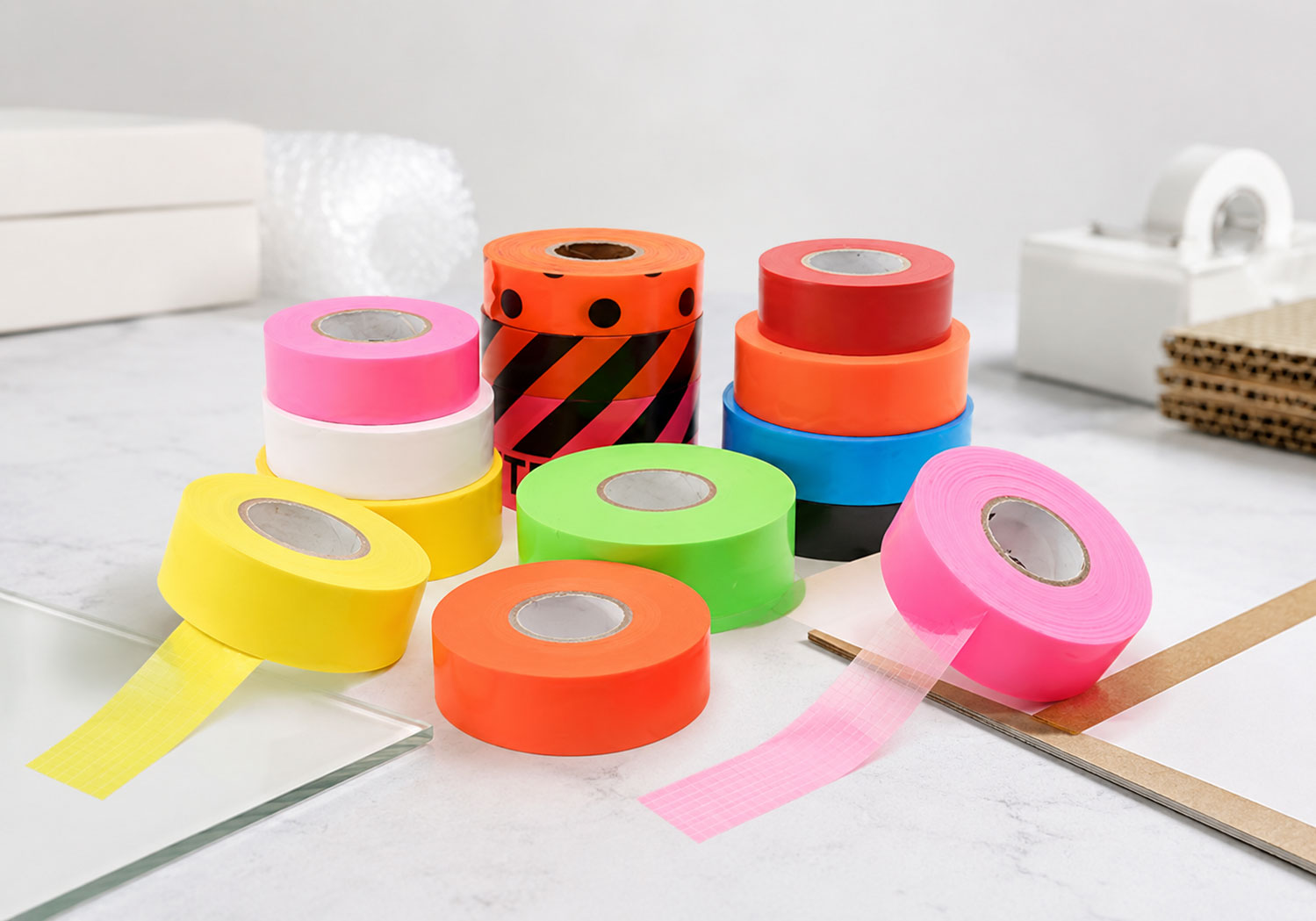
Shipping tape vs packing tape is a common question for e-commerce sellers, warehouses, moving companies and packaging distributors. In many markets, the two terms overlap, but “shipping tape” usually emphasizes transport durability, while “packing tape” is a broader term for sealing boxes, cartons and packages.
For B2B buyers, the real decision should not depend only on the name printed on the roll. The right tape should match carton weight, surface condition, storage temperature, shipping distance, sealing method, branding needs and packaging speed. Runhu provides Packing Tape, BOPP Tape and OEM adhesive tape solutions for carton sealing, logistics, wholesale distribution and industrial packaging.
What Is Shipping Tape and Packing Tape?
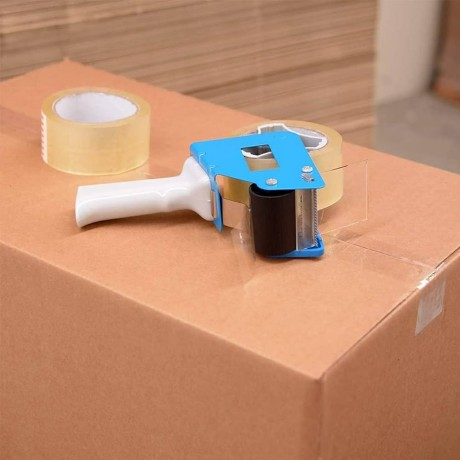
Shipping tape is a pressure-sensitive carton sealing tape designed to keep boxes closed during handling, storage and transportation. Packing tape is a broader packaging tape category used for sealing cartons, bundling packages, moving boxes and general packaging tasks.
Most shipping and packing tapes are pressure-sensitive adhesive tapes, meaning they bond when pressure is applied without needing water, heat or solvent activation. The PSTC explains that pressure sensitive adhesive tape is a flexible strip coated with a tacky adhesive that adheres to surfaces with light pressure.
In practical packaging language, shipping tape is often expected to survive parcel handling, vibration, stacking and temperature changes. Packing tape may include general-purpose clear tape, brown carton sealing tape, printed tape, hot melt tape, acrylic tape and machine-use BOPP tape.
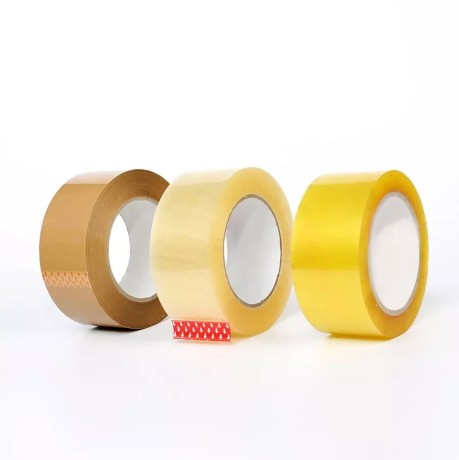
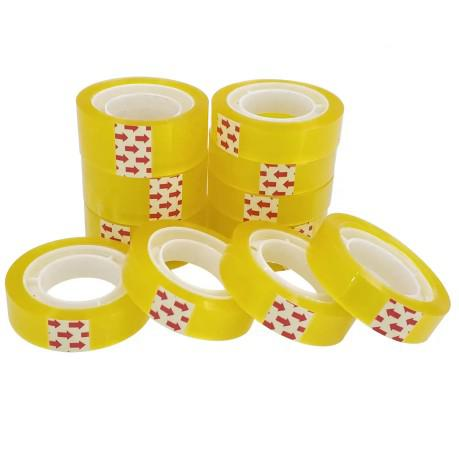
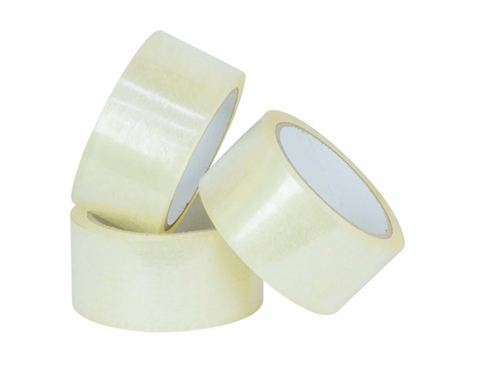
Runhu clear packing tape uses BOPP film with acrylic adhesive for sealing boxes, documents and packages, while Runhu machine-use BOPP packing tape is designed for automated carton sealing lines.
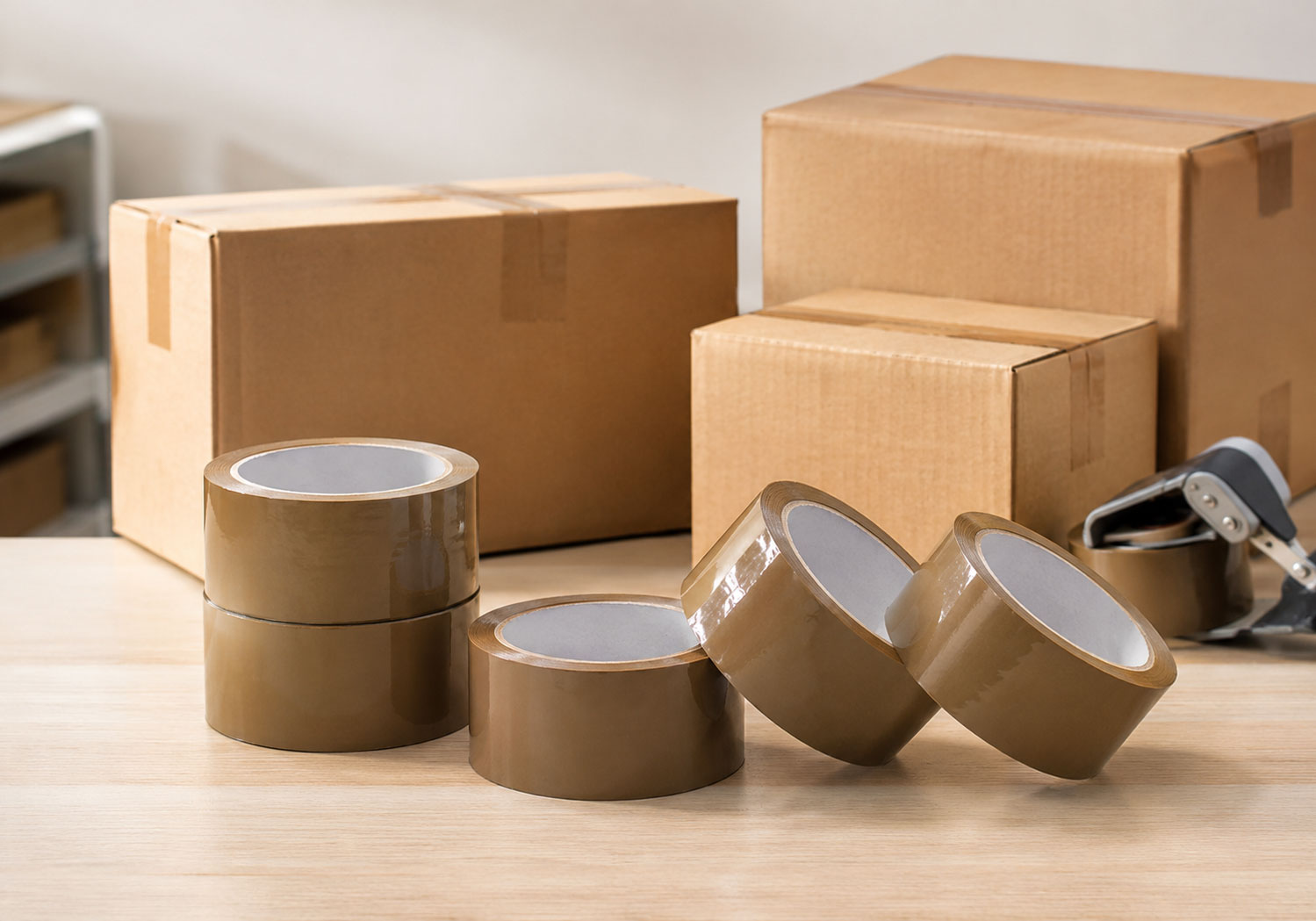
Shipping Tape vs Packing Tape Comparison Table
Shipping tape and packing tape should be compared by application, adhesive type, strength, temperature performance, carton compatibility and sealing method. The table below helps buyers choose the right tape for different packaging scenarios.
| Comparison Item | Shipping Tape | Packing Tape |
|---|
| Main Purpose | Secure cartons during delivery and logistics handling | General carton sealing, moving, storage and packaging |
| Typical Material | BOPP film with acrylic, hot melt or rubber adhesive | BOPP, paper, reinforced tape or other packaging materials |
| Best Use | E-commerce parcels, export cartons, courier shipments | Warehouse packing, moving boxes, light to medium cartons |
| Adhesive Focus | Holding power, transport durability, quick tack | General adhesion, appearance, cost control |
| Common Width | 48mm / 2 in or wider | 48mm is common; wider tapes used for heavy cartons |
| Carrier Guidance | UPS recommends plastic or nylon tape at least 2 inches wide | FedEx recommends pressure-sensitive plastic tape, water-activated paper tape or reinforced tape at least 3 inches wide |
| Buyer Focus | Carton weight, shipping distance, climate, seal integrity | Carton sealing volume, cost per roll, clarity, printability |
ASTM D5486/D5486M covers pressure-sensitive tape for packaging, box closure and sealing, including performance areas such as adhesion, breaking strength, tear resistance, thickness and weathering. For professional buyers, these test items are more useful than vague terms such as “strong tape” or “heavy-duty tape.”
How to Choose the Right Tape for Carton Sealing
Choosing the right tape for carton sealing means matching adhesive chemistry, film strength, tape thickness, roll length and application method to the package and shipping environment. A tape that works well on light cartons may fail on recycled cardboard, dusty boxes or heavy export packaging.
Acrylic adhesive is often selected for clarity, aging resistance and general packaging performance. Hot melt adhesive is often chosen for fast tack and strong initial grip on cartons. Rubber adhesive can offer aggressive adhesion on difficult surfaces, depending on formulation.
For high-volume sealing lines, manual rolls may not be enough. Runhu’s BOPP Packing Tape for Machine Use is engineered for automated sealing systems, helping reduce tape breakage, misalignment and downtime in packaging operations.
For heavy-duty or logistics packaging, Runhu’s Hot Melt BOPP Tape uses high-tensile BOPP film and hot melt adhesive for tear-resistant sealing of boxes and logistics packaging. This makes it suitable for buyers who need stronger initial adhesion and reliable carton closure.
Which Tape Should E-Commerce and Warehouse Buyers Choose?
E-commerce and warehouse buyers should choose shipping tape when packages will move through parcel networks, export logistics or rough handling, and choose general packing tape when the main need is storage, moving or light carton sealing. The best option depends on package risk, not only tape price.
For online sellers, tape failure can create returns, damaged goods and poor customer experience. For warehouses, poor tape quality can slow packing lines and increase rework. USPS says shippers may use clear or brown packaging tape, reinforced packing tape or paper tape for packages, while UPS recommends plastic or nylon tape at least 2 inches wide.
A practical buying approach is to test tape on the actual carton board, under real packing pressure, after 24 hours and under expected storage temperature. Buyers should compare unwind force, adhesion to cardboard, edge lifting, splitting, noise, clarity, printed logo quality and cost per sealed carton.
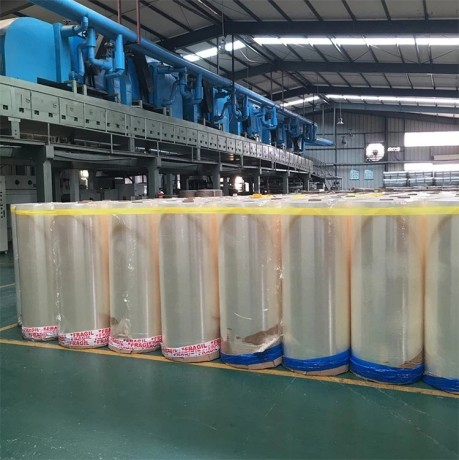
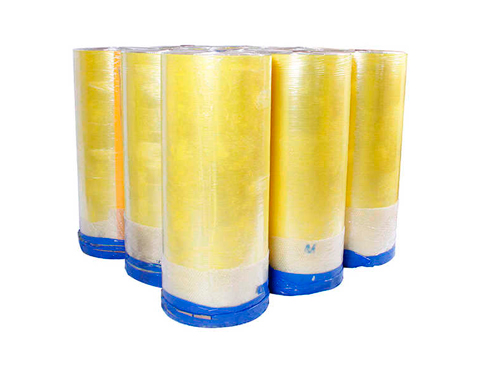
Runhu also provides Custom Packing Tape for brands that want packaging tape to support carton sealing and brand visibility at the same time. For distributors and converters, Runhu supplies BOPP jumbo rolls and finished packing tapes for different markets.
Conclusion
Shipping tape and packing tape are closely related, and the terms are often used interchangeably. The practical difference is that shipping tape is usually selected for transport durability, while packing tape covers a broader range of carton sealing and packaging tasks.
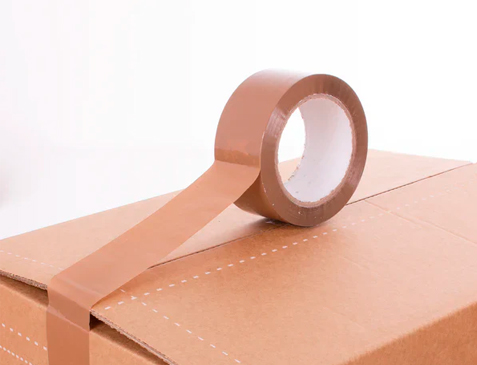
For B2B buyers, the best tape should be selected by adhesive type, BOPP film strength, carton weight, sealing method, temperature, logistics route and brand requirements. Runhu supports buyers with clear packing tape, brown packing tape, BOPP tape, hot melt BOPP tape, machine-use packing tape and custom printed packing tape for e-commerce, warehouses, logistics and wholesale packaging supply.
FAQ
1. Is shipping tape the same as packing tape?
They are often similar, but shipping tape usually refers to tape designed for parcel delivery and logistics handling, while packing tape is a broader term for carton sealing and packaging.
2. Which tape is best for shipping boxes?
For shipping boxes, choose strong BOPP carton sealing tape with good adhesion, enough width, suitable adhesive chemistry and proven performance on your actual carton material.
3. Can I use packing tape for shipping?
Yes, you can use packing tape for shipping if it is strong enough for the box weight, shipping distance and handling conditions. Avoid weak office tape or cellophane tape for carton sealing.
4. What width should shipping tape be?
Many parcel shippers use 48mm / 2-inch tape. UPS recommends plastic or nylon tape at least 2 inches wide, while FedEx recommends certain sealing tapes at least 3 inches wide for packages.
5. Is hot melt tape better than acrylic tape?
Hot melt tape usually provides stronger initial tack, while acrylic tape often provides clarity and aging resistance. The better choice depends on carton surface, packing speed and storage conditions.
6. Why choose Runhu packing tape?
Runhu provides BOPP packing tape, hot melt BOPP tape, clear packing tape, brown packing tape, machine-use tape and custom printed tape for carton sealing, logistics, e-commerce and wholesale packaging supply.