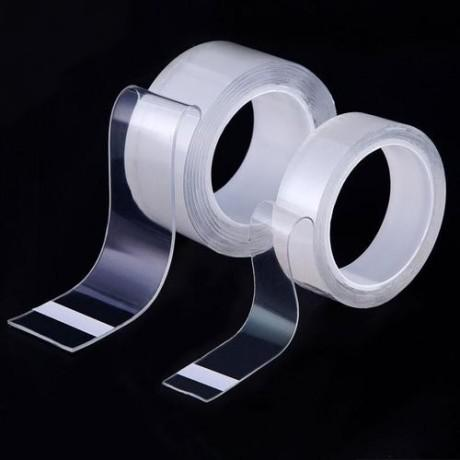
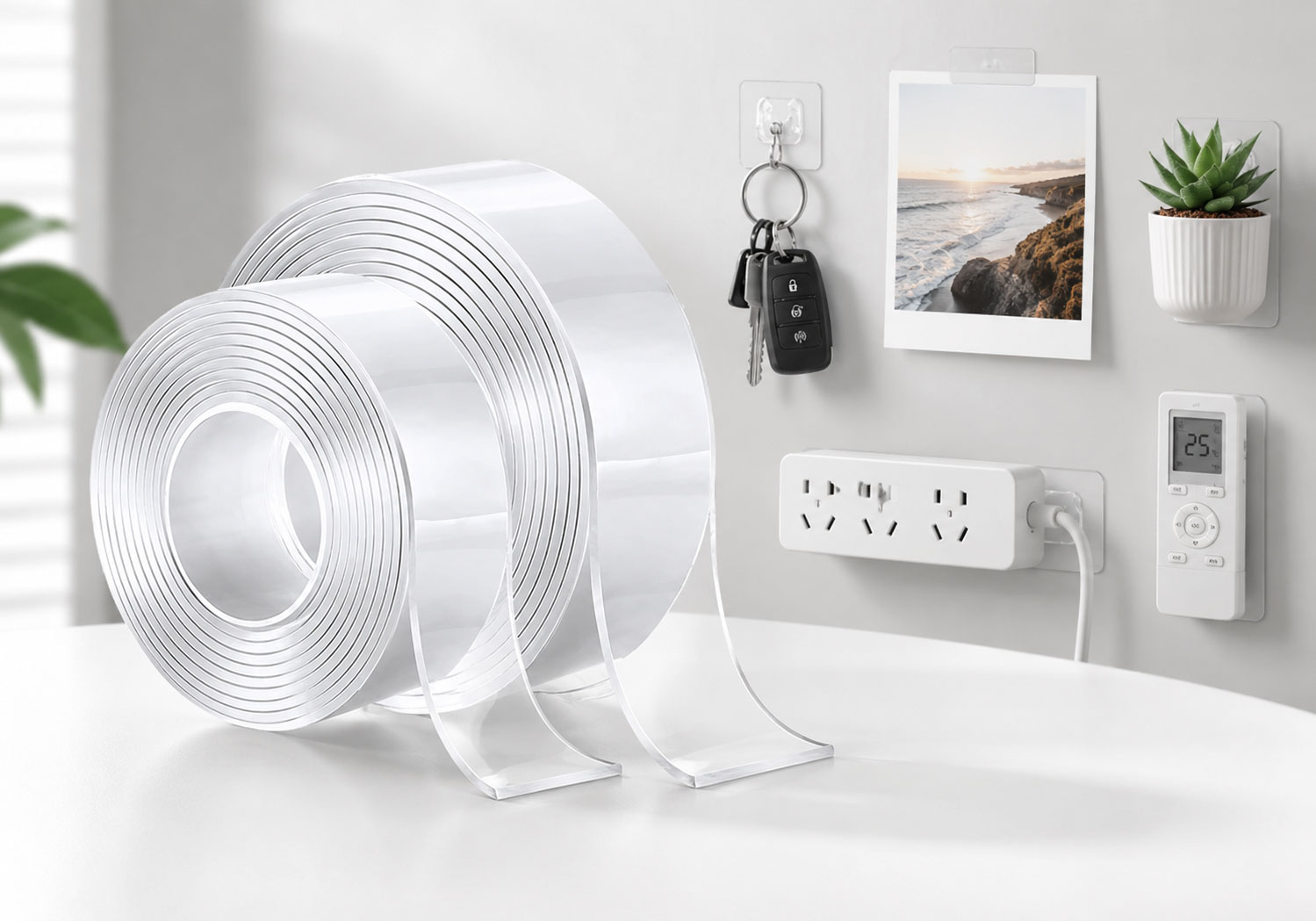
Nano tape can hold from light household items to heavier mounted objects, but the exact weight capacity depends on tape size, surface material, load direction, temperature, contact pressure and how long the load must stay in place. There is no universal weight number that applies to every nano tape roll because adhesive performance changes with real application conditions.
For buyers, the better question is not only “how much weight can nano tape hold?” but “how much weight can this tape safely hold on my surface, in my environment, for my required time?” Runhu provides Nano Tape and Double Side Tape solutions for mounting, fixing, packaging, retail display, home organization and industrial bonding applications.
What Determines How Much Weight Nano Tape Can Hold?
Nano tape weight capacity is determined by adhesive strength, bonding area, surface condition, load direction and environmental exposure. A larger contact area on a smooth clean surface can usually hold more weight than a small piece applied to dusty, uneven or painted surfaces. Nano tape works as a pressure-sensitive adhesive product. The PSTC defines pressure sensitive adhesive tape as tape that bonds with light pressure without needing heat, water or solvent activation. This means pressing the tape firmly onto the surface is essential for good contact.
Runhu nano tape uses a double-sided acrylic adhesive structure and is available in common widths such as 30mm and 50mm, with lengths such as 1m, 3m and 5m, depending on customization. Runhu’s nano tape page also lists waterproof and traceless advantages, and describes shear stress resistance up to 8N/cm² with temperature resistance from -40°C to 200°C depending on product configuration.
In practical terms, load capacity increases when the tape area increases, but not perfectly in a straight line. Edges, peeling force, wall coating quality and long-term creep can reduce actual holding performance.
Why Shear Load and Peel Load Give Different Results
Shear load means the weight pulls downward parallel to the bonded surface, while peel load means the object pulls the tape away from the surface at an angle. Nano tape usually performs better under shear load than peel load.
For example, a lightweight hook pulling straight down on a flat vertical wall creates mainly shear force. A shelf bracket pulling outward creates peel force and leverage, which is much harder for tape to resist. This is why two objects with the same weight can have very different failure risk.
The PSTC glossary defines shear adhesion as the time required, under specified test conditions including surface area and load, for a tape to slide from a flat surface. ASTM D3654/D3654M also describes shear adhesion testing for pressure-sensitive tapes under constant load applied parallel to the tape and substrate.
For buyers, this means nano tape weight claims should be read carefully. A tape may hold well in a vertical shear test but fail faster when the object creates twisting, peeling or vibration.
Nano Tape Weight Capacity Comparison Table
Nano tape load capacity should be estimated by application risk instead of using one fixed number. The table below gives a practical selection guide for common mounting scenarios.
| Application | Load Type | Tape Suitability | Buyer Recommendation |
|---|
| Posters, labels, lightweight decorations | Low shear load | Very suitable | Use small strips and clean the surface first |
| Cable clips, hooks, small tools | Moderate shear load | Suitable on smooth surfaces | Increase tape area and test for 24 hours |
| Bathroom organizers or kitchen accessories | Shear + moisture exposure | Conditional | Use waterproof tape and avoid weak wall paint |
| Picture frames or panels | Shear + possible peel | Conditional | Use larger tape area and avoid valuable/heavy items |
| Shelves, mirrors or heavy objects | High peel and leverage | Not recommended without mechanical support | Use screws, brackets or hybrid fastening |
| Outdoor signs or vehicle trim | Heat, UV, vibration | Project-specific | Confirm tape grade, temperature and aging test |
As a simple safety rule, buyers should test nano tape with at least 2–3 times the intended load before using it for long-term mounting. For example, if the final object weighs 1kg, testing with 2–3kg under the same surface and temperature conditions gives a safer performance check. Since 1kg of mass creates about 9.8N of gravitational force, even small mounted objects can create meaningful stress over time.
How to Use Nano Tape for Better Holding Strength
Nano tape holding strength improves when the surface is clean, dry, flat and pressed firmly during application. Poor preparation is one of the most common reasons adhesive tape fails.
Before applying nano tape, clean dust, oil, water and loose paint from the surface. Smooth materials such as glass, metal, ceramic tile, acrylic and sealed plastic usually perform better than rough concrete, peeling paint, powder-coated unstable surfaces or textured wallpaper. After application, press the tape evenly and allow enough dwell time before loading.
ASTM D3330/D3330M is a recognized peel adhesion test method for pressure-sensitive tape, and it is widely used to evaluate how strongly tape resists peeling from a surface. For industrial buyers, both peel adhesion and shear adhesion data should be reviewed before bulk orders.
Runhu’s Adhesive Tape Products include nano tape, double sided tape, BOPP tape, packing tape, masking tape, stretch film and other adhesive solutions for packaging, mounting and industrial use. Runhu supports wholesale and OEM/ODM buyers who need custom width, length, thickness, packaging and performance matching.
Conclusion
Nano tape can hold a surprising amount of weight when applied correctly, but its real capacity depends on surface type, tape area, load direction, temperature, moisture and time under load. It is usually strong for lightweight to medium mounting tasks on smooth clean surfaces, but it should not replace screws or brackets for heavy, valuable or safety-critical objects.
For B2B buyers, the safest approach is to test the tape under real conditions and compare shear adhesion, peel adhesion, thickness, temperature resistance and surface compatibility. Runhu provides nano tape, double sided tape and customized adhesive tape solutions for buyers who need practical bonding products for retail, packaging, mounting and industrial applications.
FAQ
1. How much weight can nano tape hold?
Nano tape can hold light to moderate objects, but the exact weight depends on tape size, surface type, load direction, temperature and application pressure. Always test before long-term use.
2. Does using more nano tape increase weight capacity?
Yes, increasing bonding area usually improves holding strength, but surface quality, edge peeling and load direction still affect the final result.
3. Why does nano tape fall off the wall?
Common reasons include dust, oil, moisture, rough texture, weak wall paint, too little tape area, heavy peel force, high temperature or insufficient pressure during installation.
4. Can nano tape hold shelves or mirrors?
Nano tape alone is not recommended for shelves, mirrors or heavy valuable items because peel force and leverage can cause failure. Mechanical support is safer.
5. Is nano tape waterproof?
Many nano tapes are water-resistant or waterproof depending on formulation. Runhu nano tape is described as waterproof and traceless, but users should still test in humid environments.
6. Why choose Runhu nano tape?
Runhu provides nano tape, double side tape and custom adhesive tape products with options for width, length, thickness, acrylic adhesive structure and wholesale/OEM packaging support.