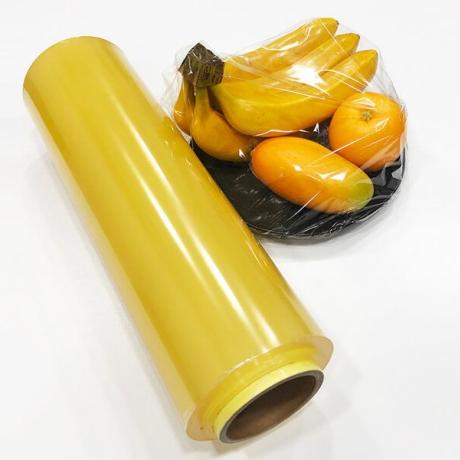
Cling film is made by melting food-contact plastic resin, forming it into a very thin film, cooling it, controlling thickness and stretch, then winding it into rolls for household, supermarket, food service or industrial packaging use. The most common materials are PVC and PE, selected according to cling strength, transparency, softness, safety requirements and market preference.
For buyers, understanding how cling film is made helps compare film clarity, stretchability, thickness, odor, puncture resistance, roll consistency and food-wrapping performance. Runhu supplies PVC Cling Film and PE Cling Film for supermarkets, catering, household packaging and wholesale distribution.
What Materials Are Used to Make Cling Film?
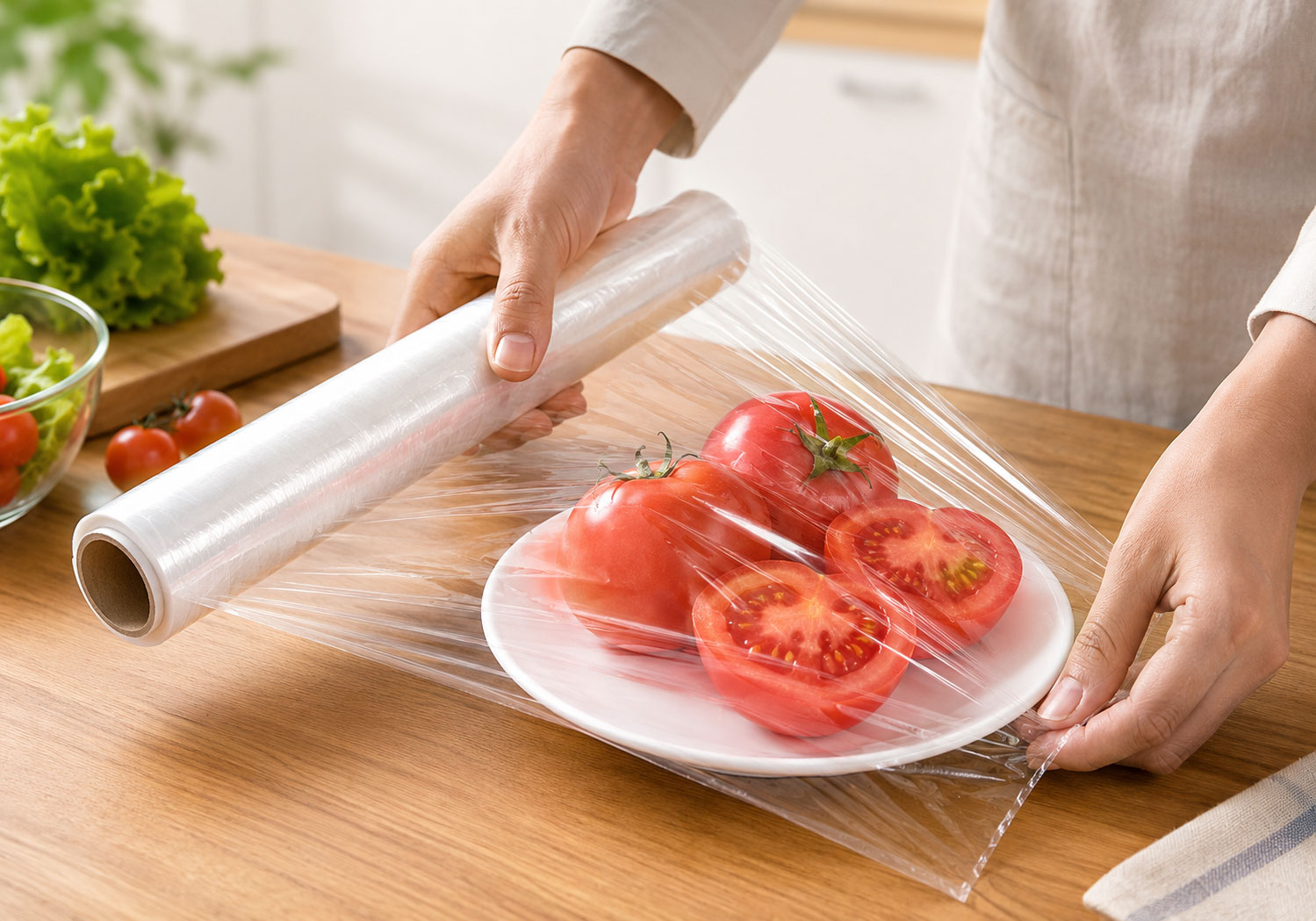
Cling film is usually made from PVC or PE resin, with the material choice determining softness, cling, clarity, stretch and food-packaging performance. PVC cling film is known for strong cling and high transparency, while PE cling film is often chosen for odorless wrapping and food-contact packaging applications.
PVC, or polyvinyl chloride, can be softened with plasticizers to improve flexibility. The FDA explains that phthalates are often associated with PVC materials and are used to make plastic products softer and less brittle, which is why food-contact material selection and regulatory compliance matter in packaging. FDA phthalates in food packaging
PE, or polyethylene, is widely used in flexible packaging because it can be processed into thin, transparent and flexible films. For food-contact products, buyers should always confirm resin grade, additives, migration requirements and supplier documentation before placing bulk orders.
How Is Cling Film Made Step by Step?
Cling film is made through resin feeding, melting, extrusion, film forming, cooling, thickness control, stretching, slitting and winding. Each step affects the final roll quality and how well the film wraps food or containers.
The process usually starts with PVC or PE pellets. These pellets are fed into an extruder, where heat and screw rotation melt the resin into a uniform plastic melt. The melt is then pushed through a flat die or circular die to form a thin film. ScienceDirect’s blown film overview explains that film extrusion can use a circular die and air pressure to form a bubble that is cooled, slit and wound.
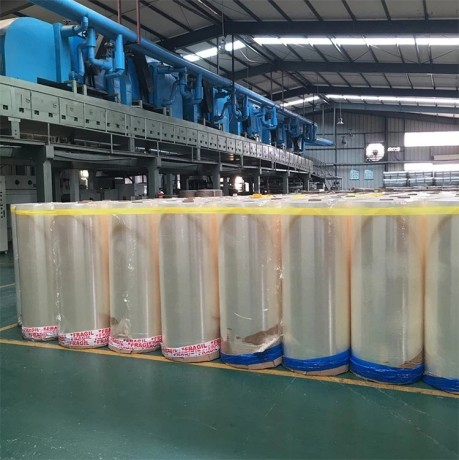
For cast cling film, the molten plastic is extruded through a flat die onto chilled rolls. Rapid cooling helps set the film structure and improve clarity. The film is then stretched and controlled to reach the target thickness. Runhu’s cling film page describes a casting method where the film is cooled on chilled rolls, stretched for optimal thickness and wound into jumbo rolls or smaller widths. Runhu lists product thickness options from 8–30 microns, which are common for different food-wrapping needs.
After forming, the film is trimmed, slit into required widths, rewound and packaged. Common commercial roll widths include household, catering and supermarket formats, while jumbo rolls are used by converters and distributors for further processing.
PVC vs PE Cling Film Manufacturing Comparison
PVC and PE cling film manufacturing differs mainly in raw material formulation, cling behavior, softness, temperature response and market application. The table below helps buyers compare both options.
| Comparison Item | PVC Cling Film | PE Cling Film |
|---|
| Main Material | Polyvinyl chloride | Polyethylene |
| Key Feature | Strong cling and high transparency | Odorless, flexible and food-packaging friendly |
| Typical Process | Cast extrusion and cooling | Blown film or cast film process |
| Thickness Range | Commonly thin and highly stretchable | Varies by application and market |
| Best Use | Supermarkets, trays, fresh food wrapping | Household food wrap, catering, fresh produce |
| Buyer Concern | Plasticizer and food-contact compliance | Cling strength and sealing performance |
| Runhu Option | Transparent PVC cling film | PE cling film wrap |
Runhu’s Food Cling Film is positioned for clear food wrapping, fresh food display and commercial kitchen use. For PE-based wrapping needs, Runhu also offers PE cling film options for food packaging distributors and household-use markets.
What Quality Checks Matter in Cling Film Production?
Cling film quality control checks thickness, width, transparency, stretch, cling force, odor, roll tension, puncture resistance and food-contact suitability. Without stable production control, the film may tear too easily, fail to cling, unwind poorly or create packaging waste.
Important quality factors include film thickness consistency, smooth unwinding, clean edges, strong self-cling and reliable wrapping around containers or food trays. For supermarket and catering use, clarity is also important because customers need to see the food clearly through the film.
Food-contact safety is another key issue. The FDA states that materials used in food-contact applications, including packaging, must be authorized before being marketed for such use in the United States. FDA microplastics and food-contact packaging
For B2B buyers, supplier qualification should include food-contact documentation, raw material traceability, production hygiene, roll-size consistency, packaging integrity and sample testing under real wrapping conditions.
Conclusion
Cling film is made by converting PVC or PE resin into a thin, flexible wrapping film through extrusion, cooling, stretching, slitting and winding. PVC cling film is often selected for strong cling and clarity, while PE cling film is commonly chosen for odorless and flexible food-wrapping applications.
For wholesale buyers, the best cling film should be selected by material, thickness, roll width, stretchability, cling strength, clarity, odor, food-contact requirements and packaging format. Runhu provides cling film, food cling film, transparent PVC cling film and PE cling film options for supermarkets, catering suppliers, food processors, household packaging brands and packaging distributors.
FAQ
1. What is cling film made from?
Cling film is commonly made from PVC or PE plastic resin. PVC provides strong cling and clarity, while PE is widely used for food wrapping and household packaging.
2. How is cling film manufactured?
Cling film is manufactured by melting plastic resin, extruding it into a thin film, cooling it, stretching it to the required thickness, then slitting and winding it into rolls.
3. What is the difference between PVC and PE cling film?
PVC cling film usually has stronger cling and high transparency, while PE cling film is often selected for odorless food wrapping and flexible packaging needs.
4. What thickness is cling film?
Cling film thickness varies by product and application. Runhu lists cling film thickness options from 8–30 microns for different wrapping requirements.
5. Why does cling film stick to containers?
Cling film sticks because of its material softness, surface contact and self-cling properties. Good cling depends on film formulation, thickness, surface condition and wrapping pressure.
6. Why choose Runhu cling film?
Runhu supplies cling film, food cling film, PVC cling film and PE cling film for supermarkets, catering, household packaging and wholesale distribution, with customization options for thickness, width and roll format.